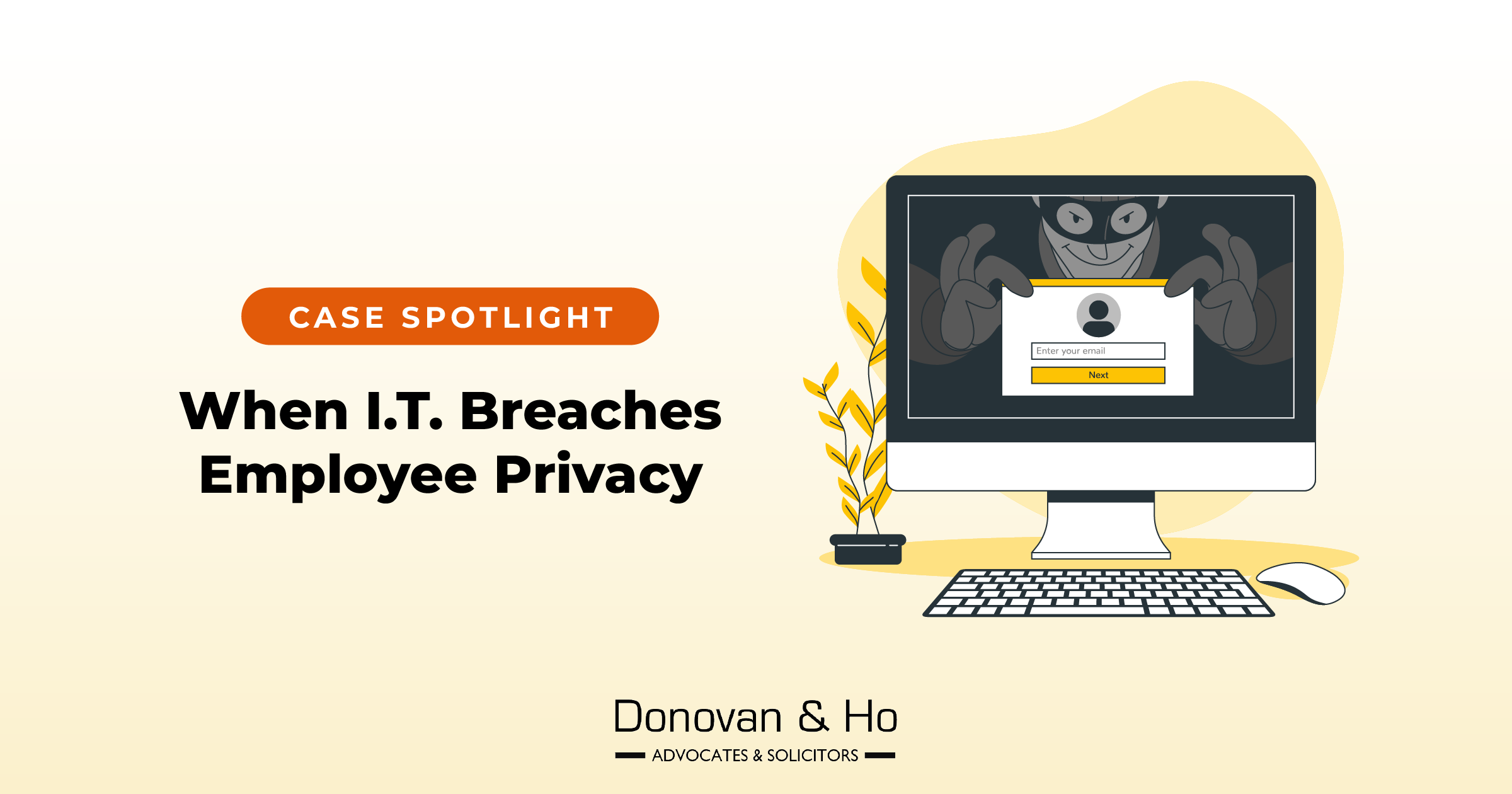
The Industrial Court recently examined whether the dismissal of a long-serving IT executive for abusing system access and harassing a colleague was lawful. In TAR v Bursa Malaysia Berhad [Award No. 582 of 2026], the Court deliberated on the boundaries of employee privacy and the weight of long service in the face of serious misconduct.
Brief Facts
- The Claimant was a Senior Executive in the Access Control unit with over 30 years of service at the Company. His role granted him privileged access to extract employee communications, but only upon specific stakeholder requests and supervisor approval.
- The Claimant had, without authorisation, accessed and extracted private Skype conversations between several employees. He subsequently shared these private conversations with an external third party using his personal email address.
- Separately, a female colleague lodged a complaint alleging that the Claimant had been stalking her and tracking her location using a mobile application. The Claimant had also sent emails to a third party containing vulgar, demeaning, and threatening language directed at the female colleague.
- The Company dismissed the Claimant following an internal investigation where he admitted to the material facts of the allegations.
Court’s Findings
The Court found that the Company proved the charges of misconduct based on the balance of probabilities.
A central factor in this decision was the Claimant’s own admissions during the internal investigation and cross-examination, where he acknowledged accessing private conversations without authorisation.
The Industrial Court emphasised that the Claimant’s role as a gatekeeper of communications required the highest standards of integrity. By exploiting his privileged access for personal reasons, he committed a gross breach of trust that struck at the heart of the employment relationship. Further, the Court rejected the Claimant’s arguments that he disclosed no Company trade information or confidential information.
The Court held:
“The Claimant, as IT personnel who had served the Company for over thirty (30) years, was under a contractual and moral obligation to safeguard all information obtained in the course of his duties. Instead, he had exploited his privileged access to the Company’s communication systems to spy on and extract private Skype conversations of fellow employees without authorisation, subsequently disseminating that information to an external party…
Given the critical nature of his position, the Claimant was expected to maintain integrity, discretion, and strict adherence to Company policies and the Personal Data Protection Act 2010. His failure to do so constitutes a fundamental breach of fiduciary duty, warranting summary dismissal… the Claimant should know his boundaries.”
The Court also rejected the argument that the Claimant’s 30 years of unblemished service should mitigate the punishment. It was held that long service does not provide a license to commit serious misconduct, when the breach involves dishonesty or threats to the safety and privacy of other employees.
Key Takeaways
Employers must ensure that employees with privileged access to sensitive data understand that
such power is strictly for business purposes. This case highlights that any unauthorised use of company systems to spy on colleagues is a fundamental breach of fiduciary duty that justifies immediate dismissal, regardless of the employee’s tenure or past performance. Businesses should maintain clear policies regarding the use of IT systems and the consequences of data breaches.
Protecting the safety and dignity of staff remains a paramount duty, and the Court will likely support dismissals where an employee’s conduct involves harassment or creates a hostile environment for others.
***
This article was written by Donovan Cheah (Partner) from Donovan & Ho’s employment law practice.
Donovan & Ho is a law firm in Malaysia, and our employment practice group has built a reputation for providing strategic employment advice to local and global organisations. Our team of employment lawyers provide advice on employment law and industrial relations including review of employment contracts, policies and handbooks, advising on workforce reductions, and managing dismissals of employees for poor performance or misconduct. We also represent clients in unfair dismissal claims and employment-related litigation.
Have a question? Please contact us.