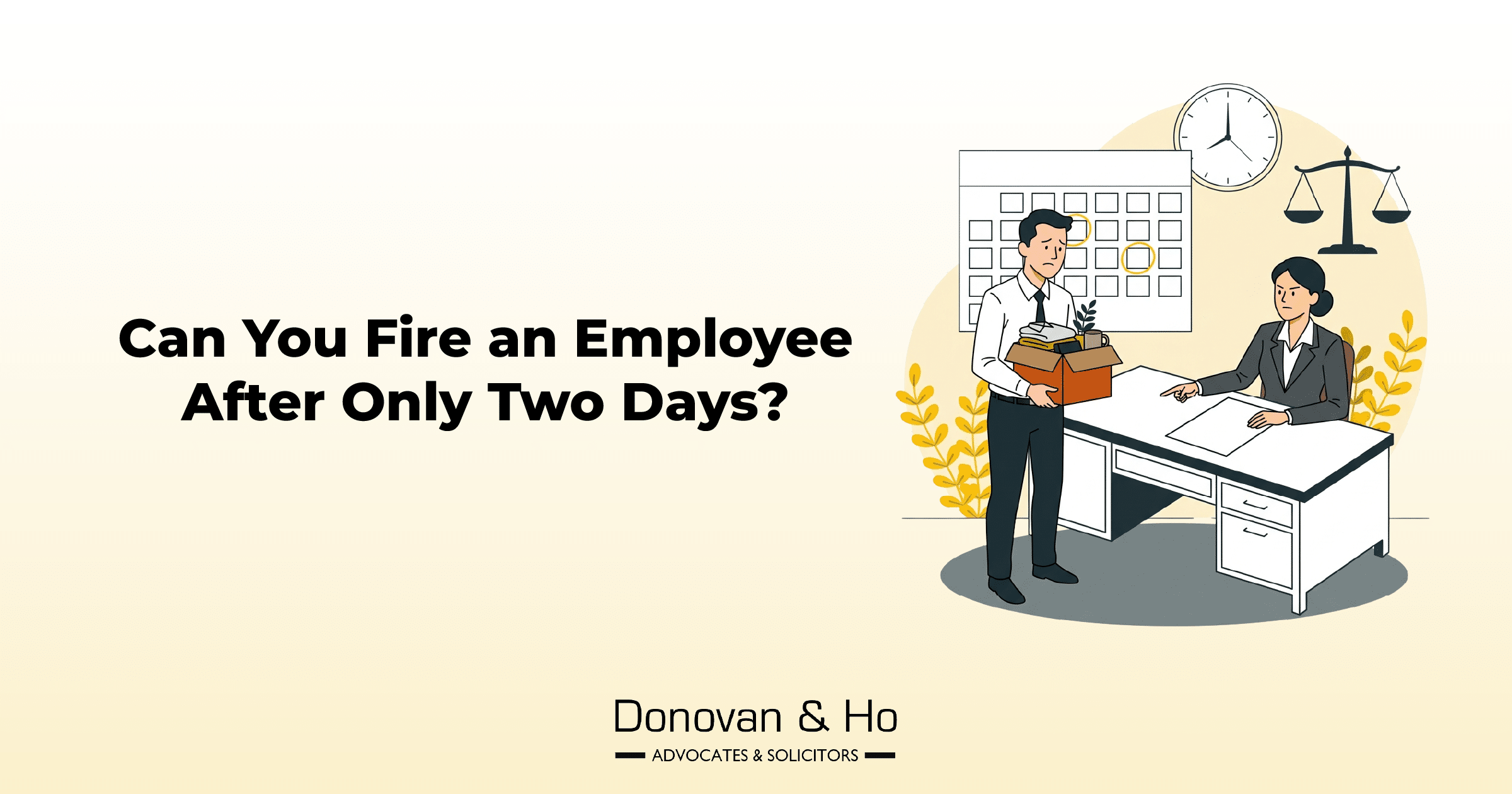
Hiring the wrong person can be a costly mistake, but can an employer terminate a new hire almost immediately? In the case of LZC v TW World Technology (M) Sdn Bhd [Award No. 479 of 2026], the Industrial Court examined whether a company was justified in dismissing an employee after just two days of work for failing to meet performance standards.
Brief Facts
- The Claimant was hired as a Back-End Developer with a monthly salary of RM12,000.
- Under the employment contract, the Claimant was subject to a three-month probationary period.
- On his first day, the Company tasked the Claimant with building an online shopping website and provided him with the necessary source code.
- The Company observed that the Claimant was unable to perform even basic tasks or begin laying the foundation for the website despite his claims of expertise during the interview.
- By the second day of employment, the Company concluded that the Claimant lacked the skills he represented in his resume and terminated his services.
- The Claimant subsequently filed a claim for unfair dismissal.
Court’s Findings
The Court noted that the Claimant remained a probationer at the time of his dismissal, having only served two days of his three-month term. Evidence showed that the Claimant failed to perform the specific tasks he was hired for, despite being provided with the source code.
During cross-examination, the Claimant also admitted he had no documentary evidence to support the claims of expertise or past projects listed in his resume.
The Court emphasized that the test for dismissing a probationer for poor performance is less stringent than for confirmed employees. Consequently, the Company was not required to provide written or oral warnings before terminating a probationer who demonstrated a total inability to do the job. The decision was deemed a reasonable exercise of management prerogative rather than a capricious or arbitrary act.
Key Takeaways
Employers have the right to assess a probationer’s performance against their expectations, provided the assessment is made in good faith. This case highlights that if a new hire clearly misrepresented their skills during the interview and cannot perform basic duties, the Company does not need to wait for the full probationary period to end before acting.
While confirmed employees are usually entitled to warnings and opportunities to improve, probationers are viewed as being on trial. If a probationer shows a fundamental lack of the required expertise from the very start, the employer can terminate the relationship without the need for a lengthy performance improvement plan.
However, employers should still ensure they have clear evidence of the employee’s failure to meet the required standards to defend against potential claims.
***
This article was written by Donovan Cheah (Partner) from Donovan & Ho’s employment law practice.
Donovan & Ho is a law firm in Malaysia, and our employment practice group has built a reputation for providing strategic employment advice to local and global organisations. Our team of employment lawyers provide advice on employment law and industrial relations including review of employment contracts, policies and handbooks, advising on workforce reductions, and managing dismissals of employees for poor performance or misconduct. We also represent clients in unfair dismissal claims and employment-related litigation.
Have a question? Please contact us.