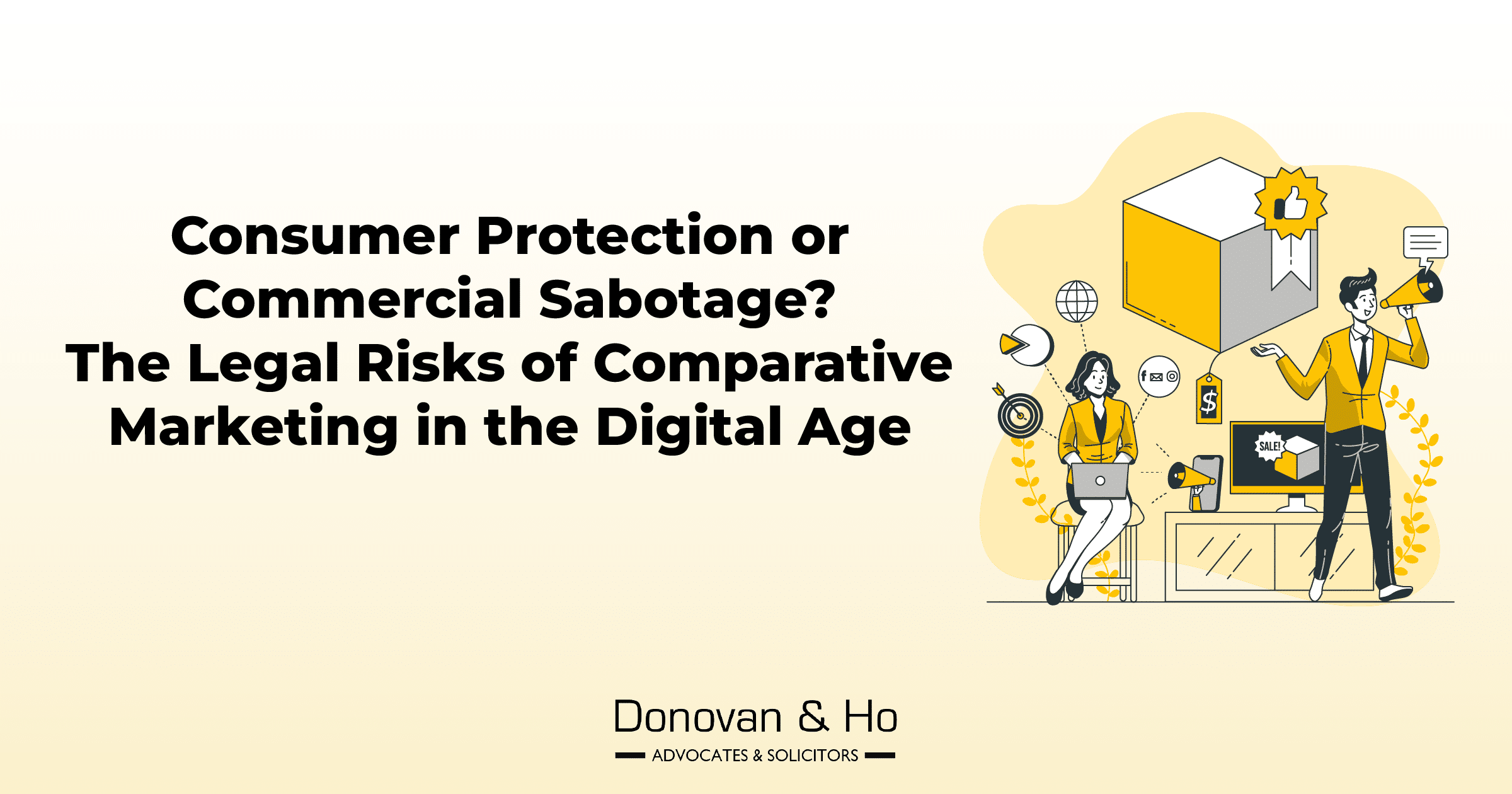
As businesses increasingly leverage social media to engage consumers and differentiate their products, comparative marketing and public commentary on competitors’ products have become common commercial strategies. However, the recent High Court decision in Aafiyat Marketing Sdn Bhd v Muhd Shakir As Salam Ya [2026] MLRHU 595 considered the legal implications when a competitor weaponises the guise of ‘consumer protection’ to undermine the trading reputation of a direct rival.
Case Background
- The plaintiff, Aafiyat Marketing Sdn. Bhd., markets and distributes various health and food products, including an olive oil product known as “Olivie Plus 30X”, which was promoted using the tagline “30X more antioxidants” than other olive oils.
- The defendant, who operated a competing olive oil business, published a series of posts on his public Facebook account labelling the plaintiff’s marketing as a “global olive oil scam,” accusing them of committing a “crime of fraud against consumers,” and claiming the olive oil was “lampante” (unfit for human consumption). Crucially, the defendant published a photograph of the plaintiff’s product packaging and label, thereby directly identifying the plaintiff’s product.
- The plaintiff subsequently commenced defamation proceedings, alleging that the posts falsely portrayed the plaintiff as engaging in fraudulent and deceptive conduct, thereby damaging its commercial reputation and goodwill.
Questions before the Court
- The Court considered whether the defendant’s public criticisms of the plaintiff’s marketing claims were justified as fair comments made in the interests of consumer education and scientific accountability, or whether they unlawfully damaged the plaintiff’s commercial reputation and goodwill.
Findings of the High Court
- The Court found in favour of the plaintiff and held that the defendant’s publications were defamatory. The Court considered that the allegations went beyond legitimate criticism of the plaintiff’s marketing claims and amounted to serious accusations concerning the plaintiff’s integrity and business practices.
- The Court found that the defendant had made serious allegations without adequate supporting evidence, and accordingly rejected the defences raised by the defendant. Crucially, the court noted that the defendant possessed a scientific report confirming the product’s high antioxidant levels yet chose to ignore it.
- The Court further found that the publications were motivated by commercial rivalry and malice, as the defendant had used the controversy surrounding the plaintiff’s product claims to promote his own competing products through the same social media platform.
- The Court reaffirmed that a company’s goodwill and commercial reputation are valuable business assets deserving legal protection, even where actual financial loss cannot be readily quantified. The plaintiff was awarded RM200,000 in general damages and RM50,000 in exemplary damages.
Implications for Businesses
- Caution in Comparative Claims and Marketing Posts: While comparative advertising and consumer education are permissible, businesses should exercise care and be mindful of regulatory requirements beyond defamation law, including the prohibition against misleading and deceptive statements and conduct under section 10 of the Consumer Protection Act 1999 and section 18 of the Trade Descriptions Act 2011. Similarly, while the Content Code permits comparative advertising, such comparisons must be based on substantiated facts, fairly presented, and not mislead consumers.
- Rigorous Review of Marketing and Technical Materials: Businesses should ensure that marketing materials, product claims, technical statements and social media content are subject to appropriate review before publication. Particular care should be taken where claims relate to product performance, scientific data, comparative claims or other technical matters.
- Strategic Management of Corporate Goodwill: Business’s reputation is often a key factor influencing consumer purchasing decisions, customer loyalty and commercial relationships. Businesses should therefore proactively protect their goodwill, reputation and brand value by monitoring public communications, responding promptly to inaccurate or misleading statements, maintaining adequate records to support product claims, and implementing appropriate policies for external communications and social media use.
Conclusion
As businesses increasingly rely on digital platforms to engage consumers and build brand awareness, the line between marketing, consumer education and commercial criticism may become increasingly blurred. The decision illustrates that, while comparative advertising and consumer education may serve legitimate commercial objectives, any public criticism of a competitor’s products or claims should be supported by substantiated facts. Inappropriate marketing activities may result in businesses facing lawsuits and hefty damages.
***
This article was written by Low Rui Thong (Associate) with assistance from Sonia Lim (Intern) from Donovan & Ho’s corporate practice.
Our corporate practice group advises on corporate acquisitions, restructuring exercises, joint venture arrangements, shareholder agreements, employee share options and franchise businesses, Malaysia start-up founders and can assist with venture capital funds in Seed, Series A & B funding rounds. Feel free to contact us if you have any queries.